
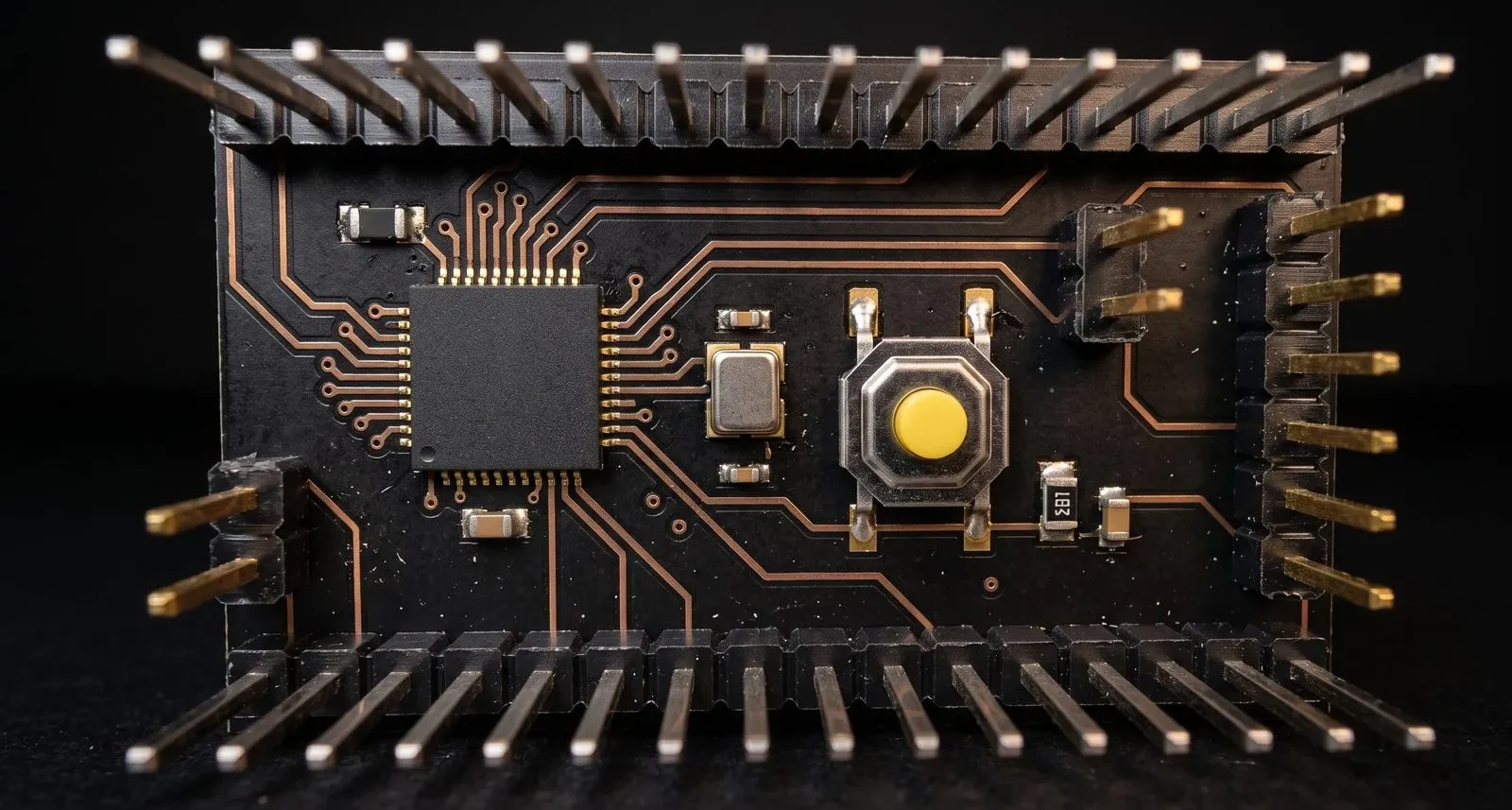
Custom Arduino Pro Mini (ATmega32U4)
Client build with JLCPCB-compatible BOM, Gerbers and pick-and-place files.
The brief
The value of a Pro Mini clone is that it changes nothing for the person using it. Existing shields, existing breadboards, existing sketches — the pinout has to match exactly or the board is just another Arduino-shaped object.
That turns the exercise into a fidelity problem rather than a design problem: the same footprint, the same pin mapping, and the usual Pro Mini conveniences (reset button, programming header, I2C and serial breakouts) without the extras.
What we did
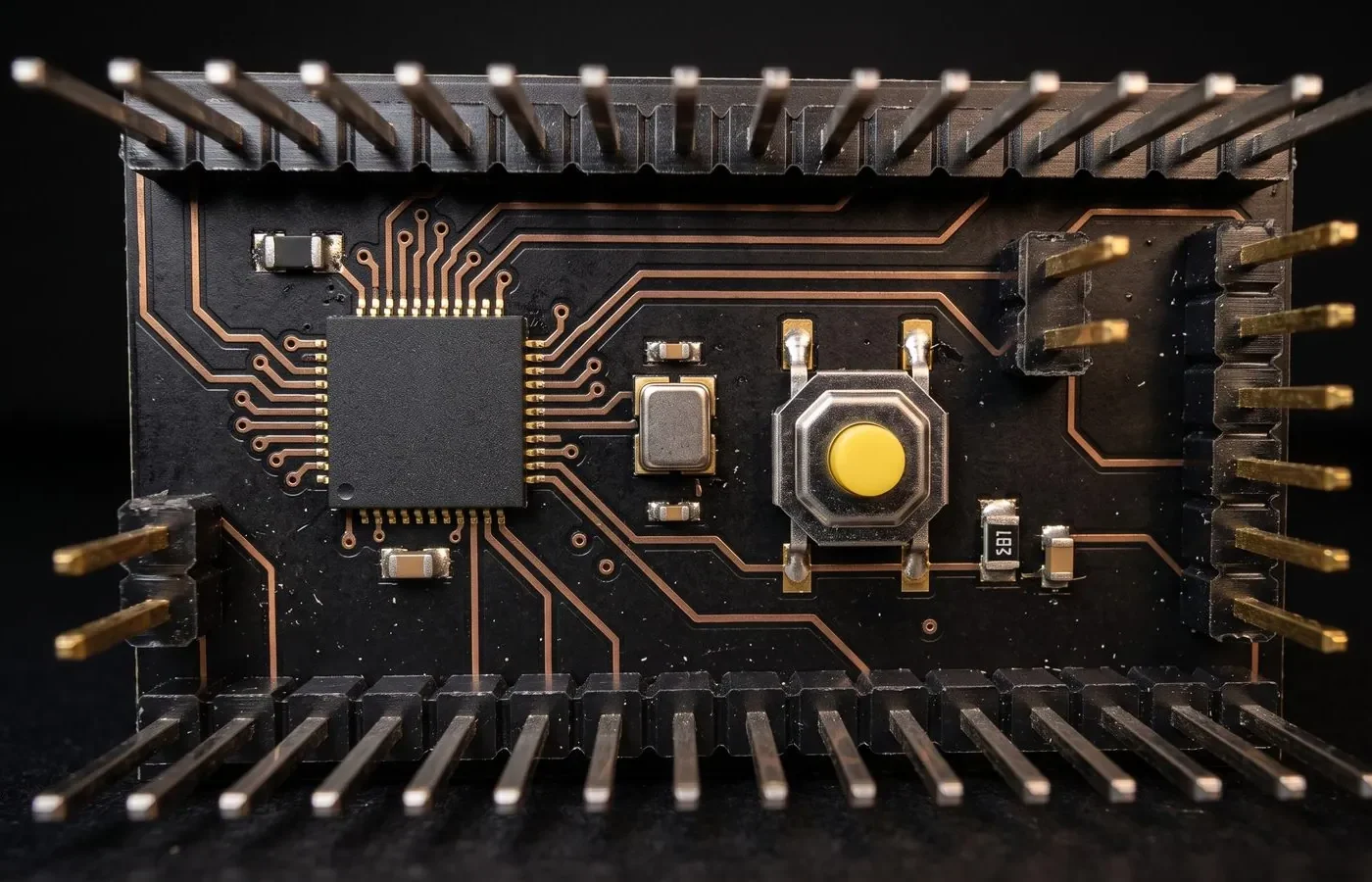
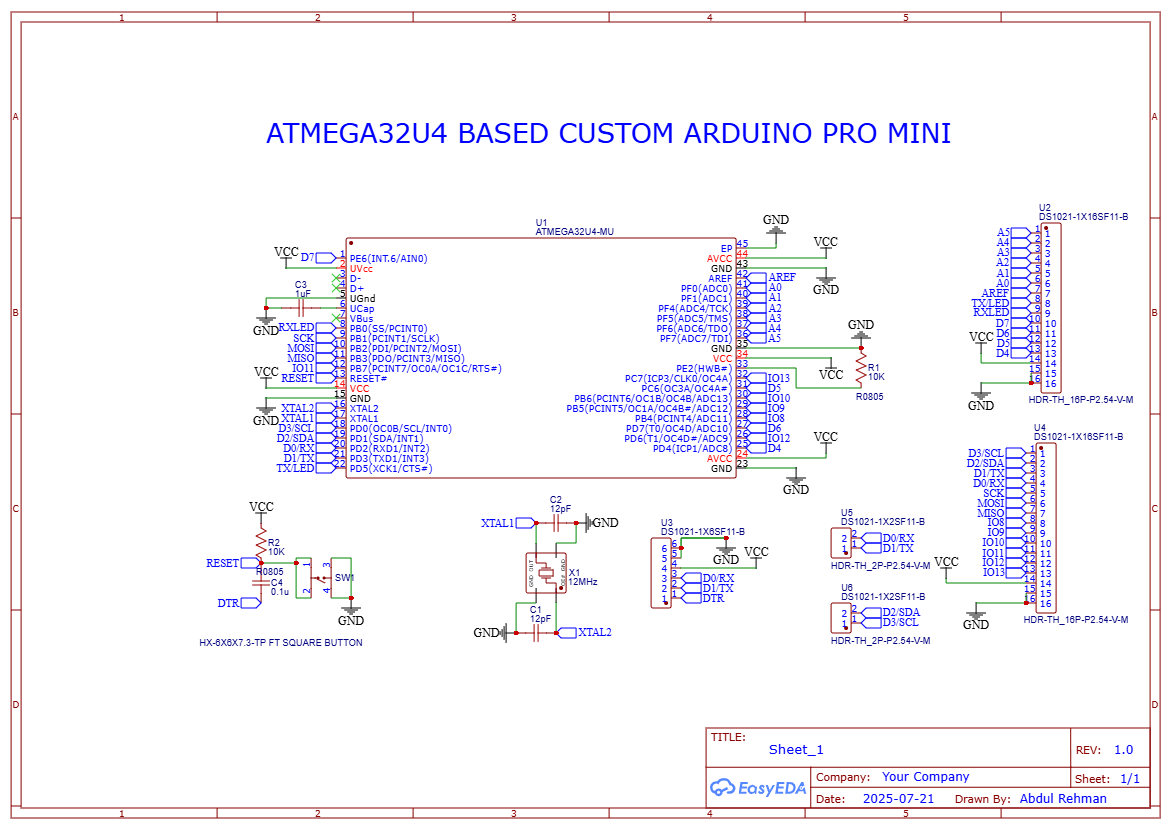
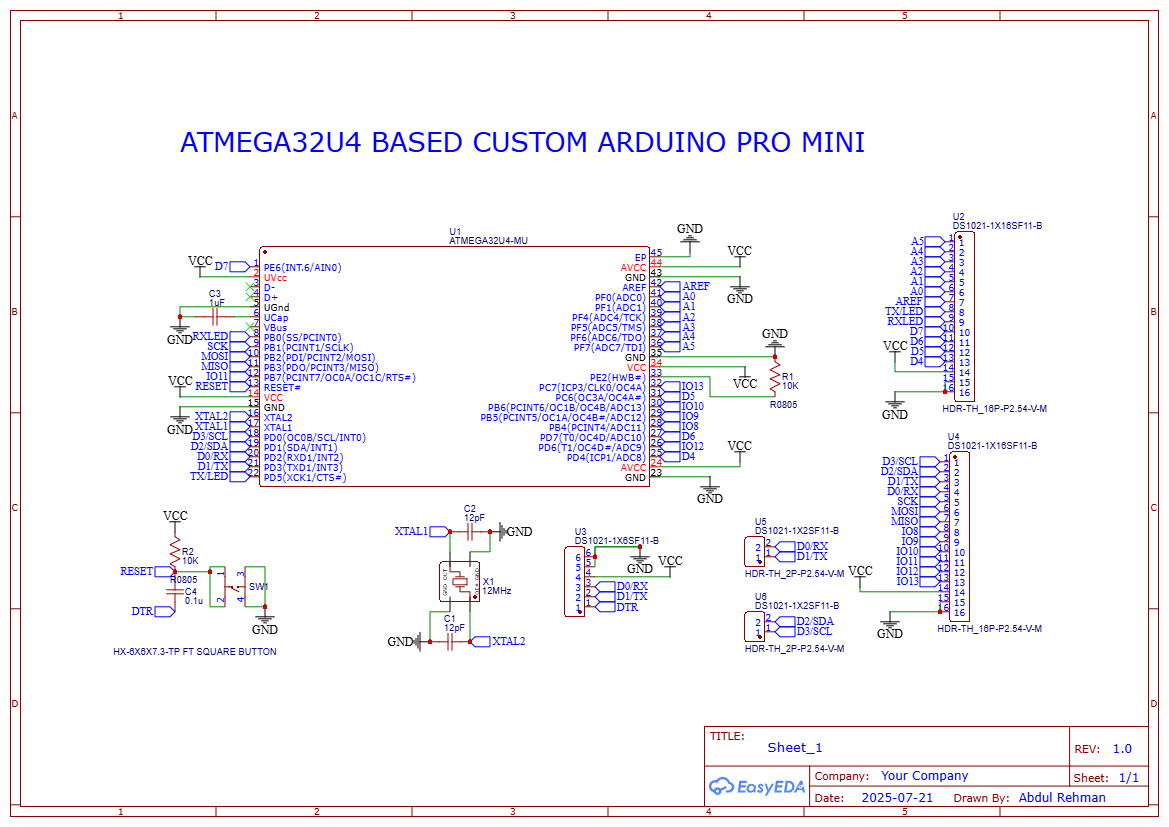
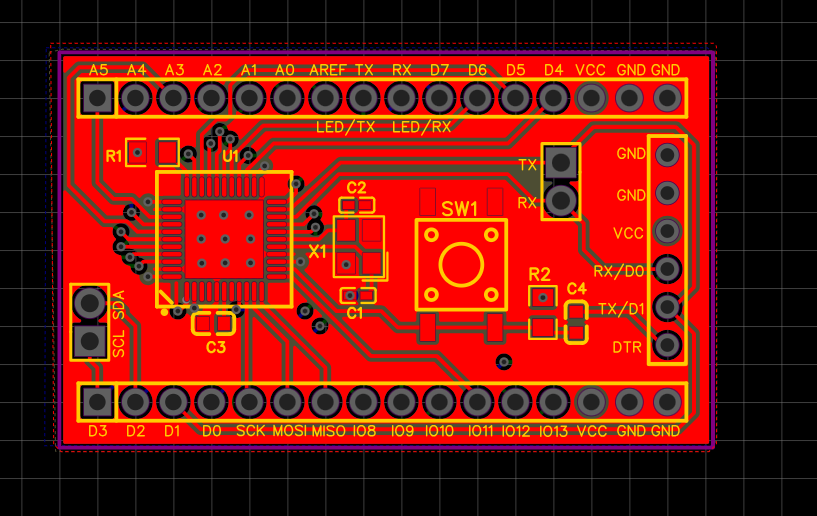
A compact, Arduino-compatible development board built around the ATmega32U4. It follows the familiar Pro Mini pin layout, so it works with existing shields, breadboards and sketches.
- Main controller: The ATmega32U4 has more I/O and peripherals than the classic Pro Mini’s ATmega328P, including hardware USB support and a dedicated hardware UART.
- Pro Mini pin compatibility: Two 16-pin headers break out the analog inputs (A0 to A5), digital pins (D0 to D13), AREF, power and the TX/RX LED lines in the standard arrangement. 12 MHz crystal: The clock uses a 12 MHz crystal with 12 pF load capacitors.
- Programming header: A 6-pin header carries TX, RX and DTR for serial upload, and the DTR line is coupled through a capacitor to reset the chip automatically.
- Reset button: A tactile reset switch with a pull-up resistor.
- I2C and serial breakouts: Dedicated 2-pin headers for D0/D1 (serial) and D2/D3 (I2C) for quick sensor connections.
- Clean power: The supply pins are decoupled, and the board includes the required USB regulator capacitor.
Design details
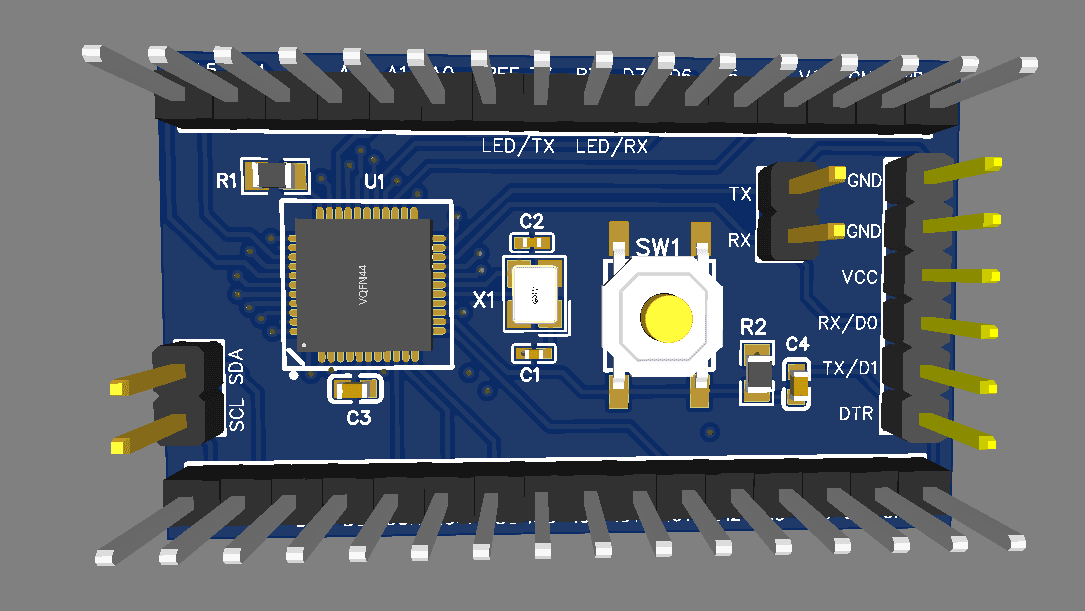
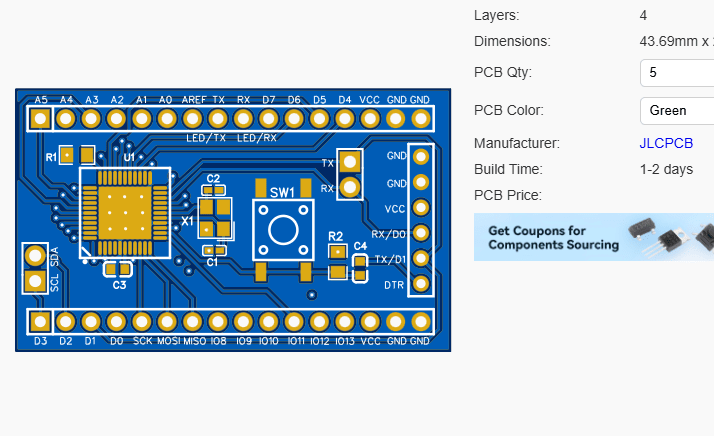
Design summary
| CAD tool | EasyEDA |
|---|---|
| Overview | A compact, Arduino-compatible development board built around the ATmega32U4. |
| Main controller | The ATmega32U4 has more I/O and peripherals than the classic Pro Mini’s ATmega328P, including… |
| Pro Mini pin compatibility | Two 16-pin headers break out the analog inputs (A0 to A5), digital pins (D0 to D13), AREF,… |
| Programming header | A 6-pin header carries TX, RX and DTR for serial upload, and the DTR line is coupled through a… |
| Reset button | A tactile reset switch with a pull-up resistor. |
| I2C and serial breakouts | Dedicated 2-pin headers for D0/D1 (serial) and D2/D3 (I2C) for quick sensor connections. |
| Clean power | The supply pins are decoupled, and the board includes the required USB regulator capacitor. |
Have a board like this?
Send us the schematic, the mechanical constraints and the deadline. We will tell you what it takes and what it costs.